I’m constructive on the economy, and a big part of that comes back to the amount of money going into AI. The build-out is moving much further than just semiconductor companies. It’s creating work across manufacturing, construction and the power industry, and I think that can support the business cycle for years.
It’s easy to spend all your time looking at the next model or the next product launch. But step back for a second and think about everything that has to happen for that technology to become available in the first place.
The spending reaches a lot of businesses
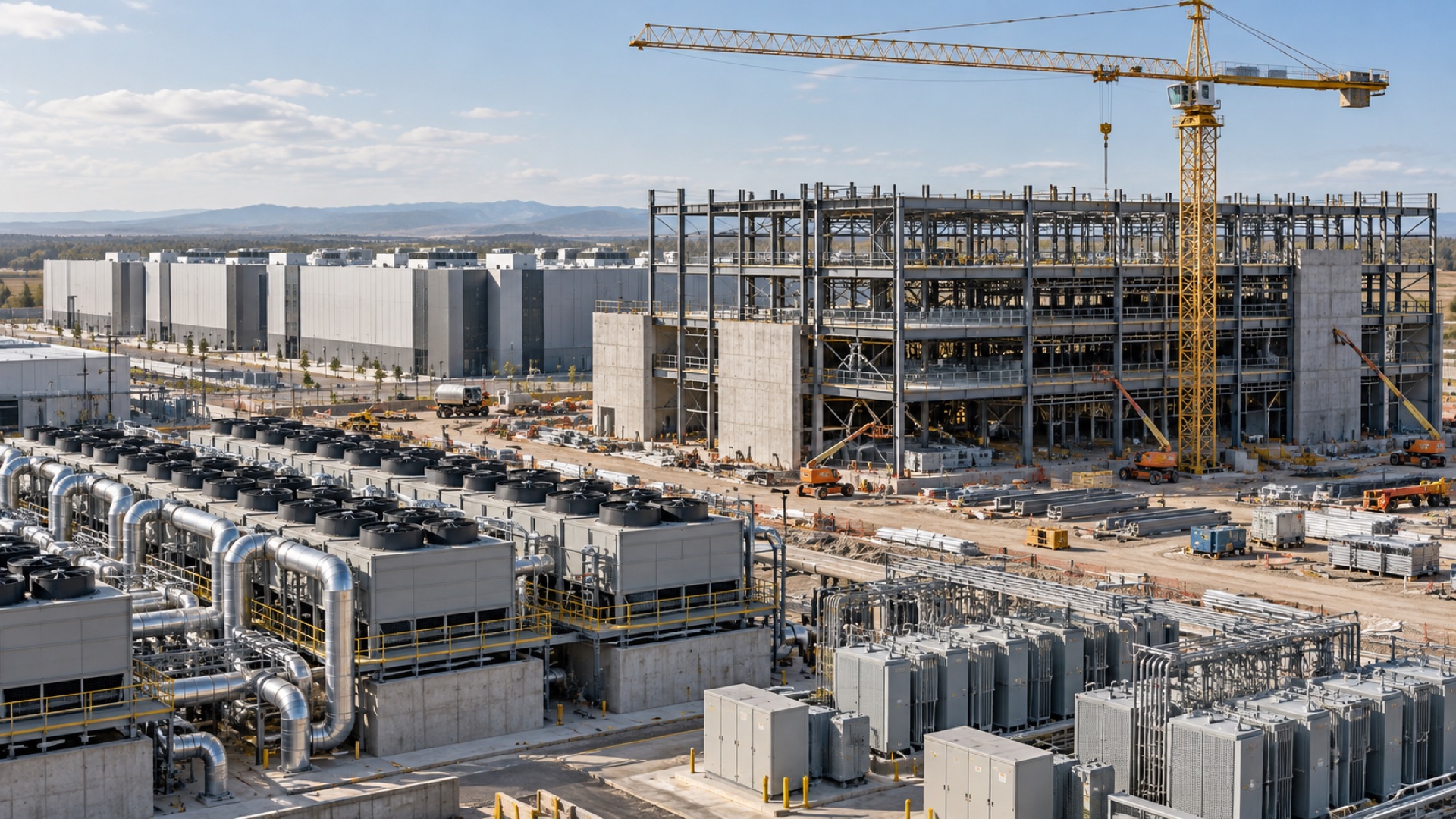
Every data centre needs computing equipment, power, electrical infrastructure, cooling, networking, land and construction. Someone has to supply all of that. Someone has to build it. And those businesses are getting orders before the data centre is even up and running.
That’s what I mean when I say this is supporting the broader business cycle. The spending becomes supplier revenue, factory production, construction activity, hiring and wages. It starts moving through the economy well before we know how much money the finished facility is going to make.
The latest manufacturing data is encouraging in that context. July’s ISM manufacturing survey came in at 55.6, its strongest reading since May 2022. A reading above 50 generally points to expansion. Manufacturing employment also moved back into expansion.
That doesn’t mean AI explains the whole survey. There are other sources of demand in the economy. But it does give us a stronger economic backdrop to consider alongside the amount of construction and equipment spending happening around AI.
Keep in mind, these projects take years. You can announce a data centre, but you still have to get the power, the equipment and the site ready. Those long timelines spread the work across several years, which is one reason I don’t think about this as a story that finishes with the next earnings report.
There will be delays and there will be disappointments. That’s part of building anything at this scale. My view is that we’re still relatively early in the process of putting this capacity in place.
Then the capacity has to earn money
The next part is just as important. As more computing capacity comes online, I want to see it turning into revenue and operating profit. Spending a lot of money is one thing. Showing that customers actually need what you’ve built is what supports the business over time.
That’s why I’m interested in demand and usage alongside the construction numbers. Are customers using the new capacity? Are they committing to more of it? Is the business becoming more profitable as that capacity comes into service?
I think there’s a process here that can keep feeding itself. More computing power helps produce more capable models. Better models make more tasks worth doing with AI. That brings in more usage, which can support further investment in the infrastructure.
It won’t happen in a straight line. Some parts will move faster than others, and the stock market will get ahead of itself from time to time. But I do think it’s difficult to appreciate how much can change when the technology gets better, becomes cheaper to use and reaches more people at the same time.
For now, I see a lot of real economic activity behind the AI story. The next test is whether the new capacity keeps producing the revenue and profits that justify building more. That’s what I want to keep following as this develops.